


Remember, Remember the Fifth of November: The Story of Guy Fawkes and Bonfire Night in London
Every November, London comes alive with the glow of bonfires, spectacular fireworks and the unmistakable chill of autumn in the air. But behind the colourful displays and crackling flames lies a dramatic story of religious conflict, political intrigue and a failed conspiracy that nearly changed British history.
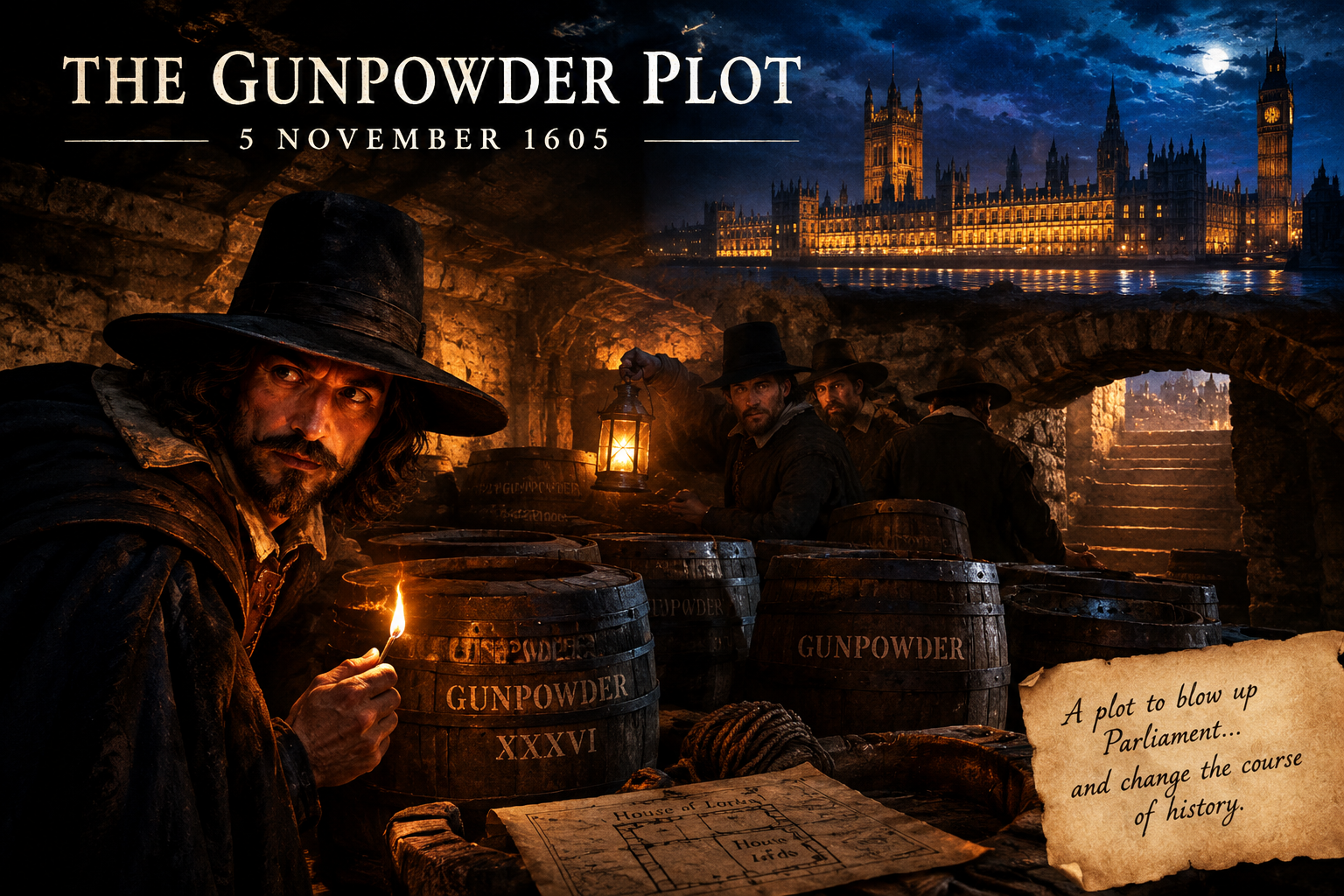
The Gunpowder Plot of 1605: A Plan to Blow Up Parliament
To understand Bonfire Night, we need to return to the early seventeenth century, when England was deeply divided by religious tensions. Following the English Reformation, Roman Catholics faced restrictions on practising their faith, and hopes for greater religious freedom remained unfulfilled under King James I, who took the English throne in 1603.
A group of Catholic conspirators, led by Robert Catesby, devised an audacious plan. They intended to blow up the Houses of Parliament during the State Opening, killing the King and other leading figures of government in the process. The plotters secretly arranged for 36 barrels of gunpowder to be stored in a cellar beneath the House of Lords. Among the conspirators was Guy Fawkes, a former soldier with experience fighting in continental Europe. He was given the task of guarding the gunpowder stored in a cellar beneath the House of Lords. The plan was discovered before it could be carried out. An anonymous letter warned Lord Monteagle to stay away from Parliament, prompting a search of the buildings on the night of 4 November. Officials found Fawkes guarding the explosives and arrested him.
The King survived, Parliament was saved, and the failed conspiracy became the reason Britain remembers 5 November every year.
Who Was Guy Fawkes?
Guy Fawkes was born in York in 1570 and baptised at St Michael-le-Belfrey Church, close to the magnificent York Minster. He later became a Roman Catholic and travelled to continental Europe, where he served with Spanish forces fighting Protestant Dutch rebels. During this period, Fawkes was persuaded to join the conspiracy led by Robert Catesby. His military background made him responsible for guarding the gunpowder hidden beneath the House of Lords and ensuring the preparations were in place. It was a dangerous assignment, and Fawkes was discovered just hours before the planned explosion.
Following his arrest, Fawkes was questioned about the conspiracy. He initially refused to reveal the identities of his fellow plotters, but King James I authorised the use of torture to extract information. Held in the Tower of London, Fawkes eventually disclosed details of the plan and identified other conspirators. His testimony helped the authorities understand the extent of the plot and pursue those involved.
On 31 January 1606, Fawkes was taken to Westminster to be hanged, drawn and quartered, a brutal public execution intended to punish the offender and deter others. Historical accounts indicate that he fell from the scaffold and broke his neck, dying before the full sentence could be carried out. Today, Guy Fawkes remains the most recognisable figure associated with the Gunpowder Plot, remembered through Bonfire Night traditions and the familiar Guy Fawkes effigy.
Why Do We Celebrate Bonfire Night on 5 November?
After the plot was discovered, people across England lit bonfires to celebrate the King's survival. The annual observance of 5 November became established, eventually developing into the fireworks-filled celebration known as Bonfire Night or Guy Fawkes Night.
The familiar rhyme captures the occasion perfectly:
“Remember, remember the fifth of November ”
For generations, Bonfire Night has brought communities together for evenings of fireworks, bonfires and seasonal festivities.
Traditional celebrations often include:
- Fireworks displays: Colourful explosions lighting up the November sky. A dramatic reminder of the gunpowder that inspired the plot.
- Bonfires: Large outdoor fires that provide warmth on chilly autumn evenings.Traditionally associated with the burning of effigies, including those of Guy Fawkes.
- Guy Fawkes effigies: Traditionally made from old clothes and stuffed with straw or newspaper.
- Seasonal treats: Toffee apples, jacket potatoes, hot dogs and steaming mugs of hot chocolate and mulled wine.
- “Remember, remember the Fifth of November”: The famous rhyme that has helped keep the story alive across generations.
- Community celebrations: Local bonfire societies, public displays and family gatherings continue the tradition in different ways.
Although the celebrations have evolved over the centuries, the story of the Gunpowder Plot remains at their heart.
Remember, Remember — and Discover London for Yourself
Remember, remember the fifth of November — because in a city as historic as London, every street has a story to tell. More than 400 years later, the Gunpowder Plot of 1605 remains one of the most infamous events in English history. One of the most fascinating things about London is that its history is woven into the streets, buildings and landmarks that visitors encounter every day.
The most enjoyable ways to discover these landmarks is on a guided London bicycle tour. But you don't have to wait until 5 November to discover the stories behind London's famous landmarks.
Explore our bicycle tours and start your next London adventure.
You May Also Like
Make this year the most magical yet